
What’s Actually Happening at Anfield (And Why)
The songs, the scarves, the silences and the rituals. What each one means, so you can be part of the day instead of watching it happen around you.
The Short Version
If you only remember three things: be in your seat before kick-off, hold your scarf up when the song starts, and follow the crowd’s lead during any tribute or silence.
Seven Things You’ll Notice
You’ll Never Walk Alone
The song comes from the 1945 musical Carousel, and Gerry and the Pacemakers took it to number one in 1963. Anfield made it its own.
When the ground sings it, it is emotional and the hairs stand up on the back of your neck. It is iconic, and nothing else in football matches it.
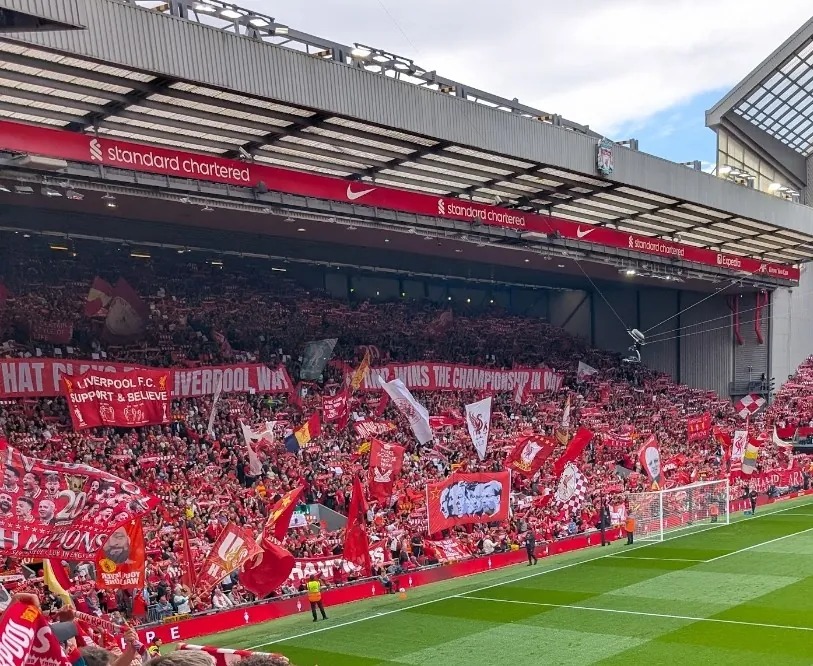
The Kop
The name comes from the Spion Kop, a hill in South Africa where a battle was fought in January 1900. Liverpool Echo sports editor Ernest Edwards gave the steeply banked end of Anfield that name in 1906, in memory of the soldiers who fell. The Kop became all-seater after the last standing match in April 1994.
The atmosphere builds early for the big games, and the biggest are usually the Sunday ones against Everton and Manchester United. Those are the days the Kop is at its loudest.
“This Is Anfield”
The sign above the tunnel is the last thing home players pass before they walk out, and Bill Shankly put it up in 1971. The one in the tunnel today is not the original, and since Jürgen Klopp arrived the rule has been that players only touch it if they have won something for the club.
The Team Bus Arrival
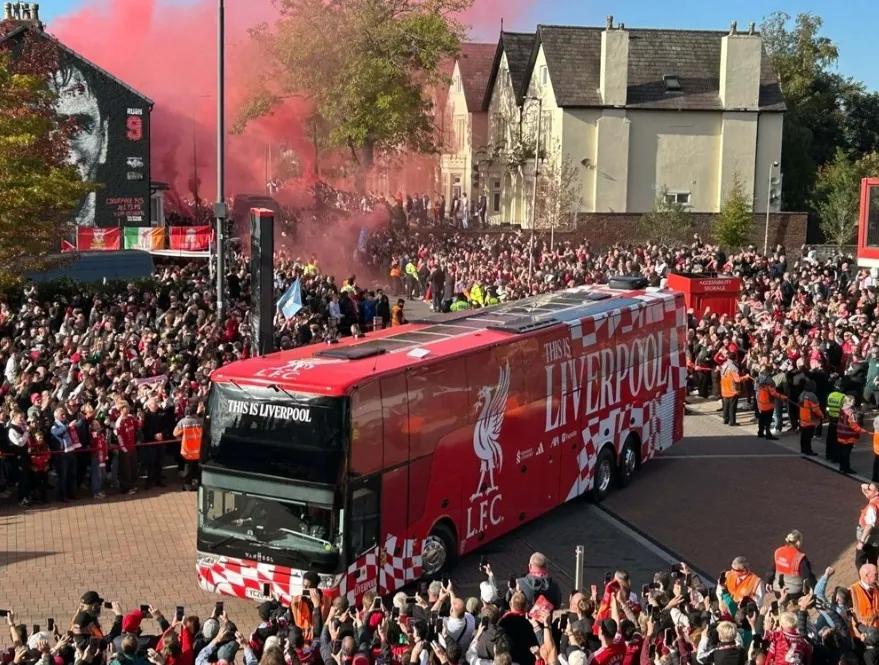
Before the match, supporters line the route to welcome the players’ coach. It is one of the best free parts of matchday, and the route is marked on the Matchday Map.
Anywhere along the route is good. If you can get there, the elevated Main Stand concourse gives a great view of the coach arriving.
European Nights
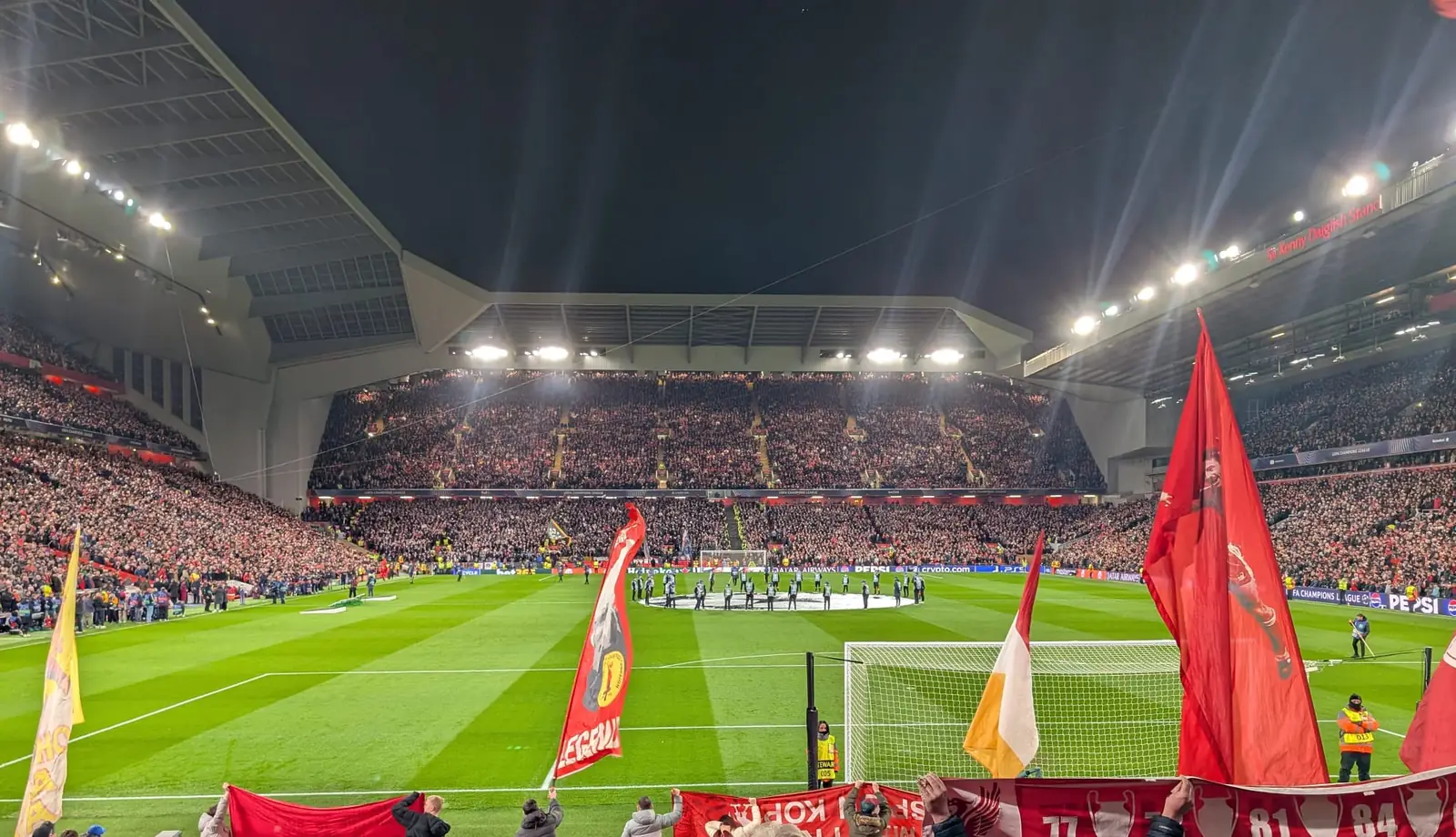
Anfield under the lights on a European night is a different feeling. It is history and pedigree, and on these nights the ground is an unstoppable force.
The proof is Barcelona in May 2019. Liverpool lost the first leg 3-0, then won the second 4-0 at Anfield to go through, which many call the greatest comeback in Champions League history.
The Shankly Gates & the Statues
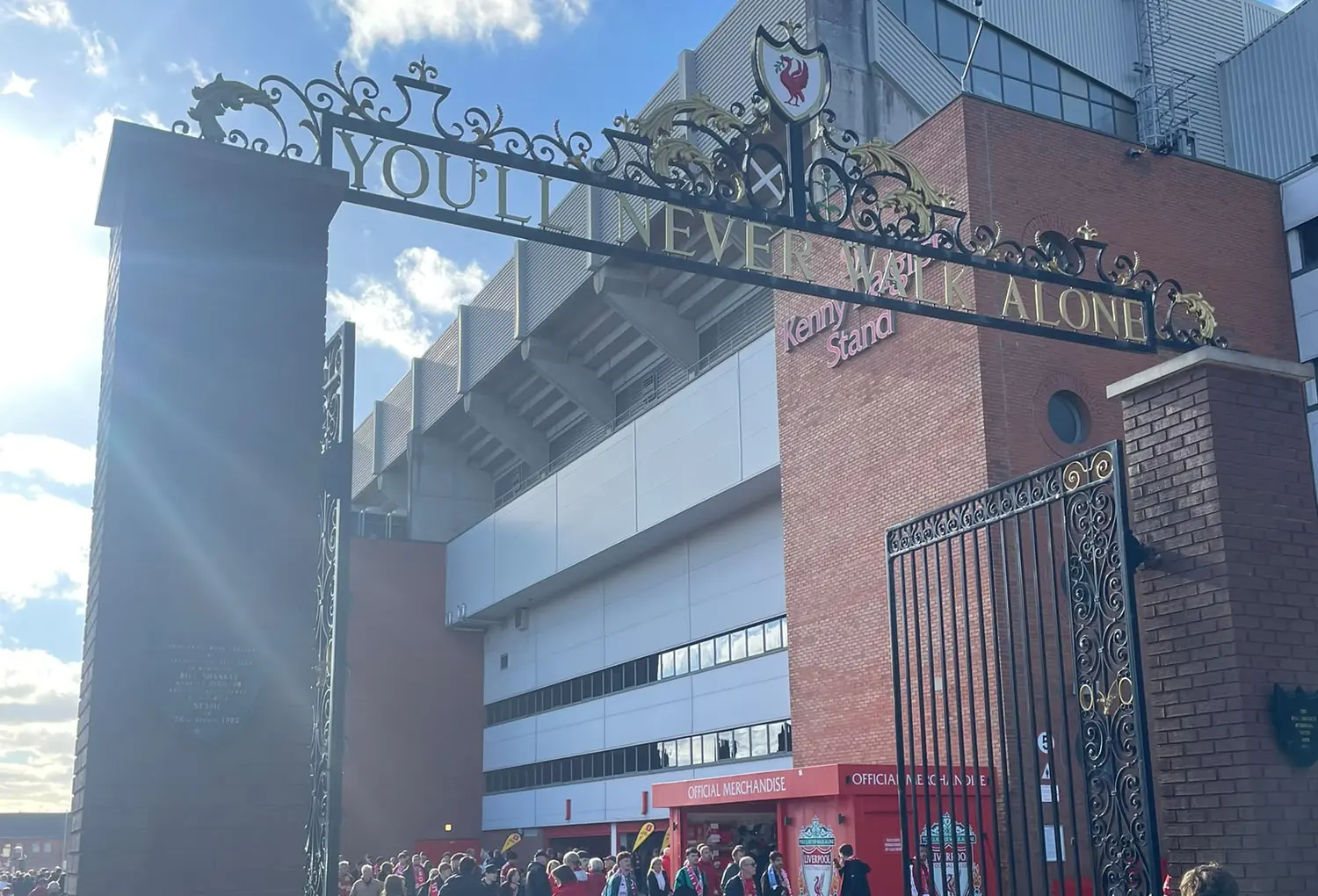
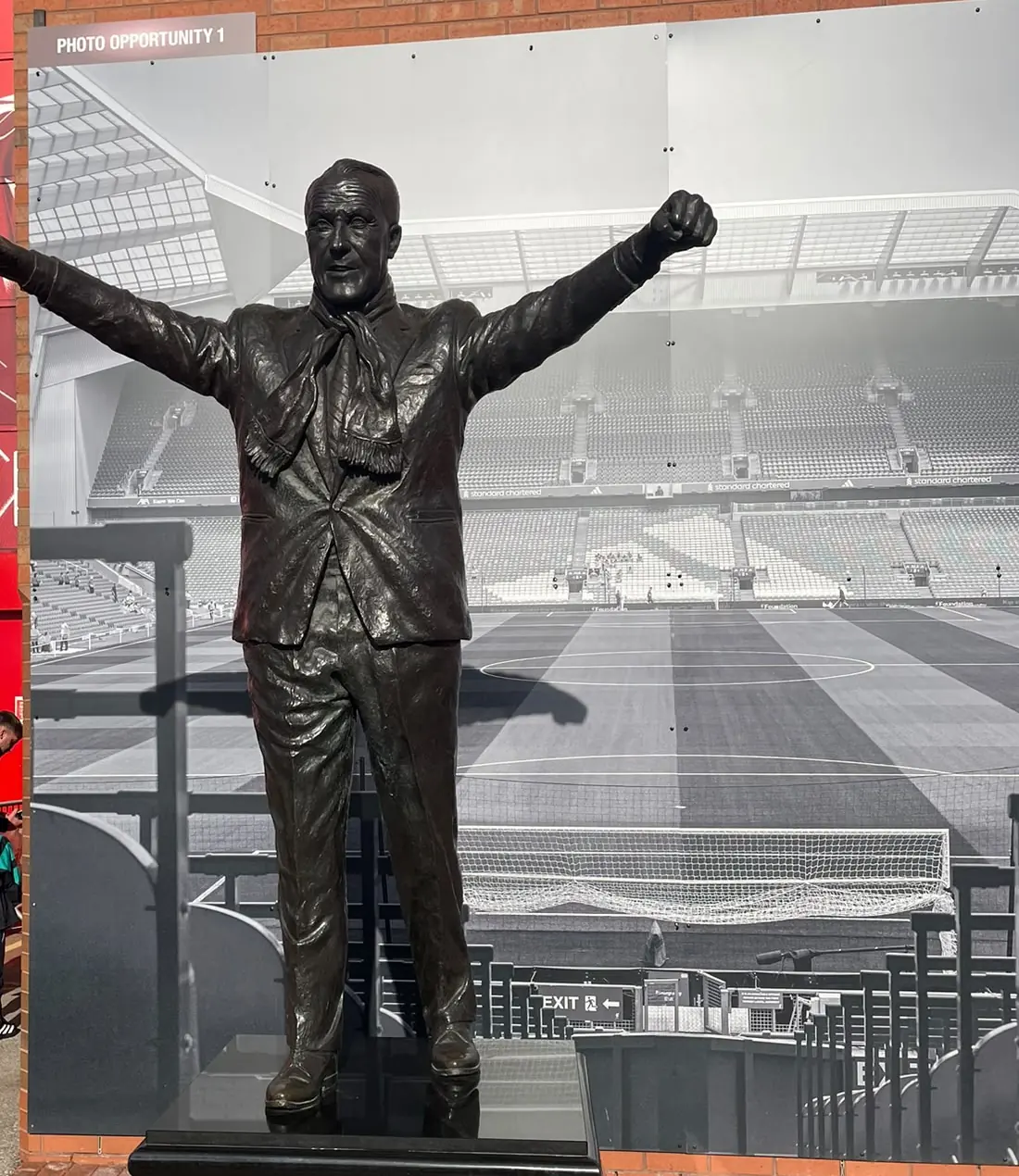
The Shankly Gates, the Bill Shankly statue and the other tributes outside the ground are where most visitors take their matchday photos.
All of the spots can be visited on matchday if you are there early enough.
The Jota and Silva Memorial
Diogo Jota, Liverpool’s number 20, died in July 2025 along with his brother, André Silva. In July 2026, on the eve of the first anniversary, the club unveiled a permanent memorial to them on 97 Avenue, close to the Main Stand.
Hillsborough
On 15 April 1989, 97 Liverpool supporters lost their lives at Hillsborough. At Anfield, you will see how the club and its supporters remember them. The Hillsborough Memorial is at the base of the Main Stand, on the outer concourse, and carries an eternal flame and the names of those who died.
Every year, the match closest to the anniversary is marked by a minute’s silence before kick-off. If you are at Anfield then, the ground goes completely quiet. Please stay silent and follow the crowd’s lead.
An unimaginable tragedy. The families and campaigners fought for justice, and continue to do so. The 97 will never be forgotten.
If you want to pay your respects at the memorial, go quietly and early, and do not treat it as a photo spot.
What Not to Do
Small things that make a visit go better.
Don’t arrive at the last minute
The build-up is part of the day. The song, the scarves and the noise all happen before kick-off.
Don’t treat the tributes as photo ops
Put the phone down during silences and remembrance moments.
Don’t bring flares or smoke
You may see them outside on big days, but they are banned inside the ground and can get you ejected or arrested.
Don’t leave early
The ground empties fast, and you miss the end of the song and the reaction. Plan your way home before you go: see Getting There.
Next Up
Get the Matchday Map
Murals, the best pre-match pubs, where to grab a scouse pie, and where fans gather to cheer the team bus in — all on one map.
One email with the map, then occasional matchday updates. Unsubscribe any time. Privacy